

Something strange keeps happening in software engineering discourse: every week another headline claims coding is dead. Comments under almost every technical video ask the same question—should I still learn to code in 2026? Some engineering skills cannot be replaced with AI.
Here is a clearer picture: AI replaces tasks, not engineers. Models can draft, debug, and refactor quickly. They do not sit in roadmap meetings, carry on-call context, or grow a junior through a stuck afternoon. People said arithmetic was doomed when calculators spread; then encyclopedias when Wikipedia arrived; then memorization when search went mainstream. Each time, the work shifted toward framing, verification, and judgment. AI is the same kind of shift—only faster.
If you built your identity around only typing code, that lane is narrowing. If you build it around asking the right questions, reviewing what ships, designing under real constraints, trimming scope, and lifting others—you are not competing with the model on the same axis.
This article walks through five skills that get more valuable as AI gets better, using one running thread: your team asks you to add a notification system. Most tools (and rushed humans) jump straight to SNS, queues, and templates. The gap shows up earlier—and later—than that.
Why the running example matters
Notifications sound boring precisely because everyone “knows” how to build them. That makes them a good stress test: the boilerplate is what AI handles best. The differentiator is everything around the boilerplate—what problem you thought you were solving, what breaks when reality hits, what the org will ask for next, and what you refuse to ship in v1.
Five skills AI cannot replace
1. Problem framing
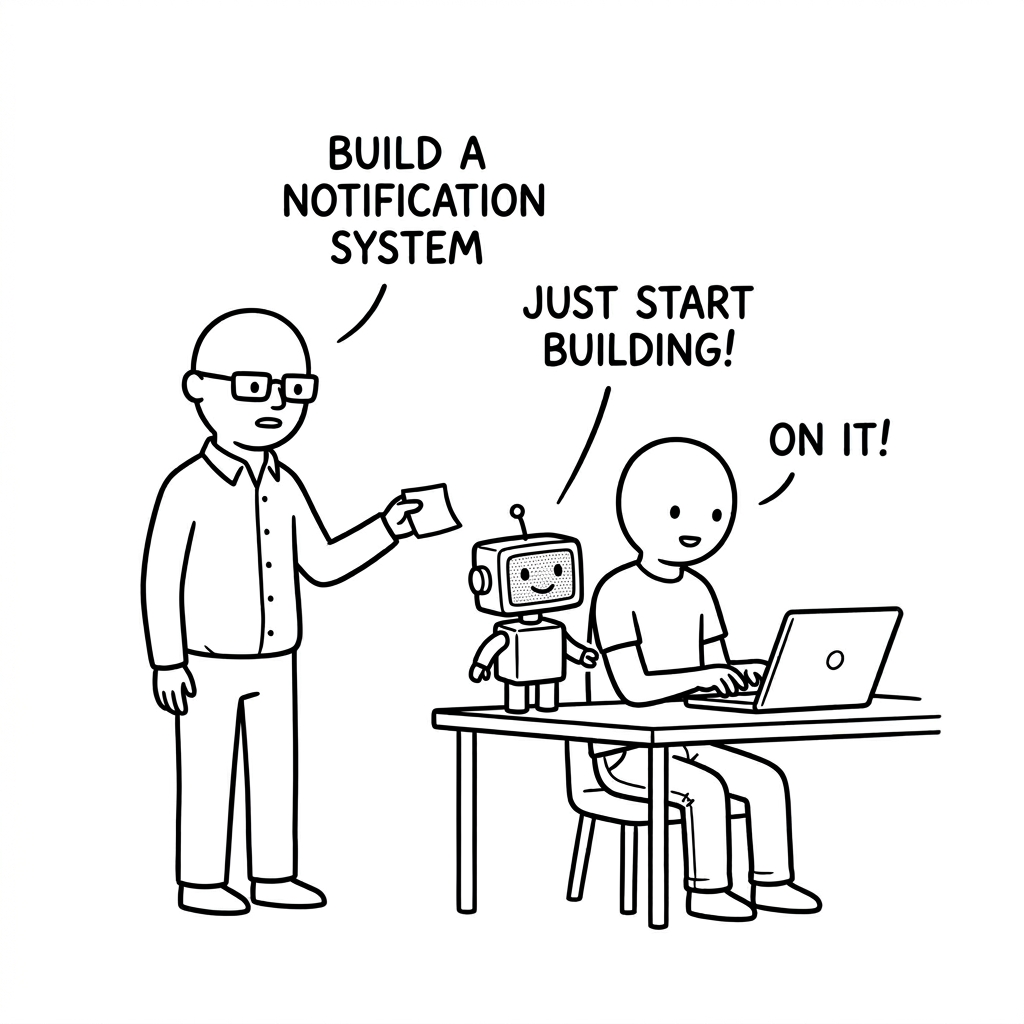
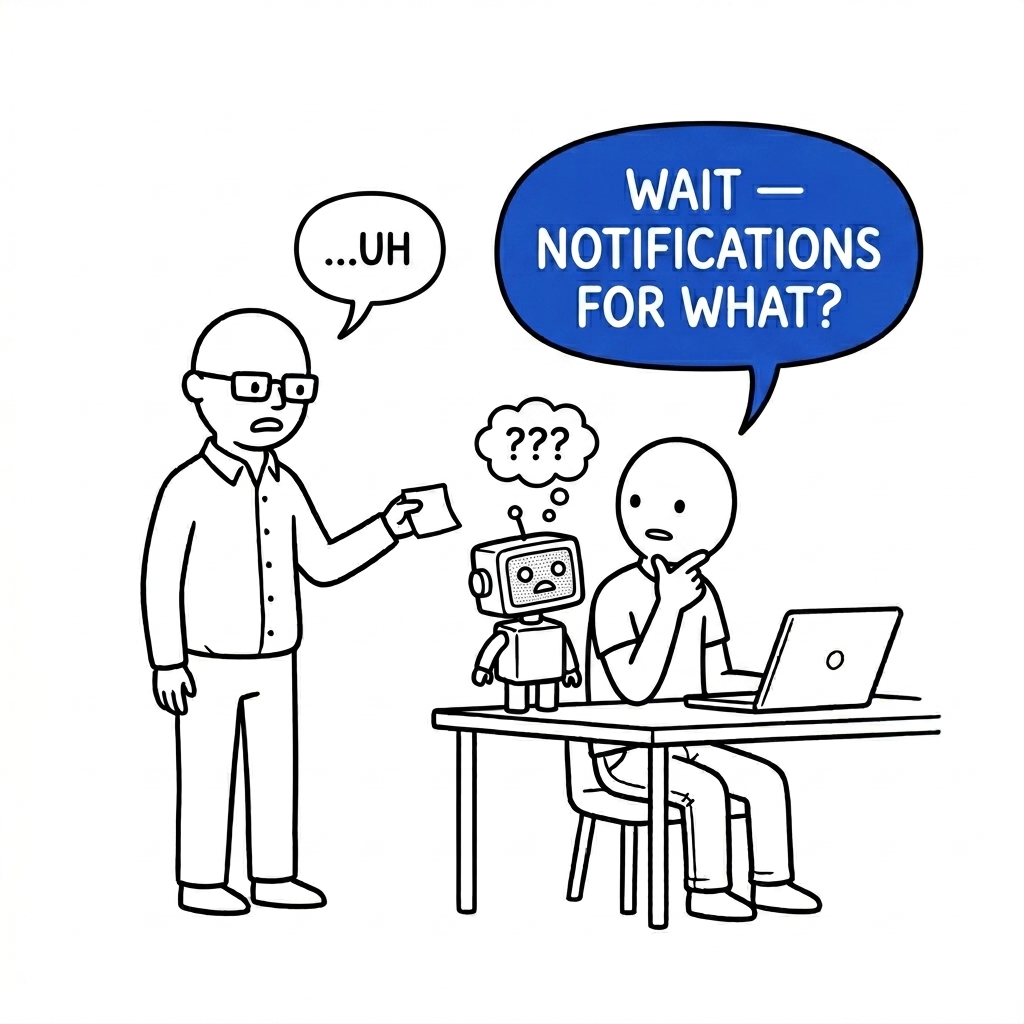
The first skill is knowing what to solve before deciding how. Before you scaffold anything, you pause: notifications for what? You skim support tickets or talk to the PM. Often the real issue is not “no notifications”—it is missing critical signals: account alerts, security warnings, payment failures, churn drivers tied to silence. That is a different product from a generic marketing blast engine.
Furthermore, the same feature name hides different priorities: subscription renewals might matter at one company; poor feedback or fraud signals at another. AI excels at how once you describe the task; it has no stake in whether the description matches the business. It will happily ship a beautiful, tested pipeline that solves the wrong problem. Strong engineers spend disproportionate time tightening the problem statement—sometimes more than on the implementation.
2. Code review and taste
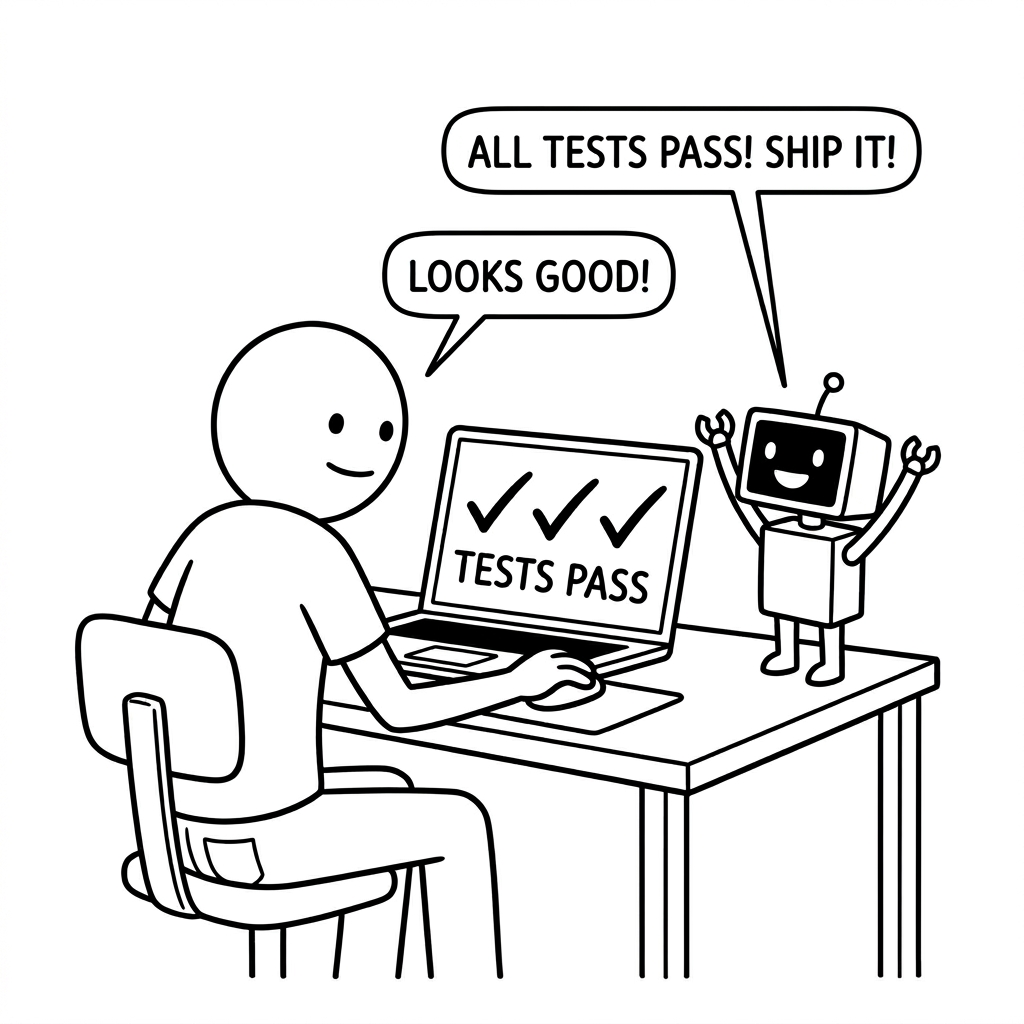
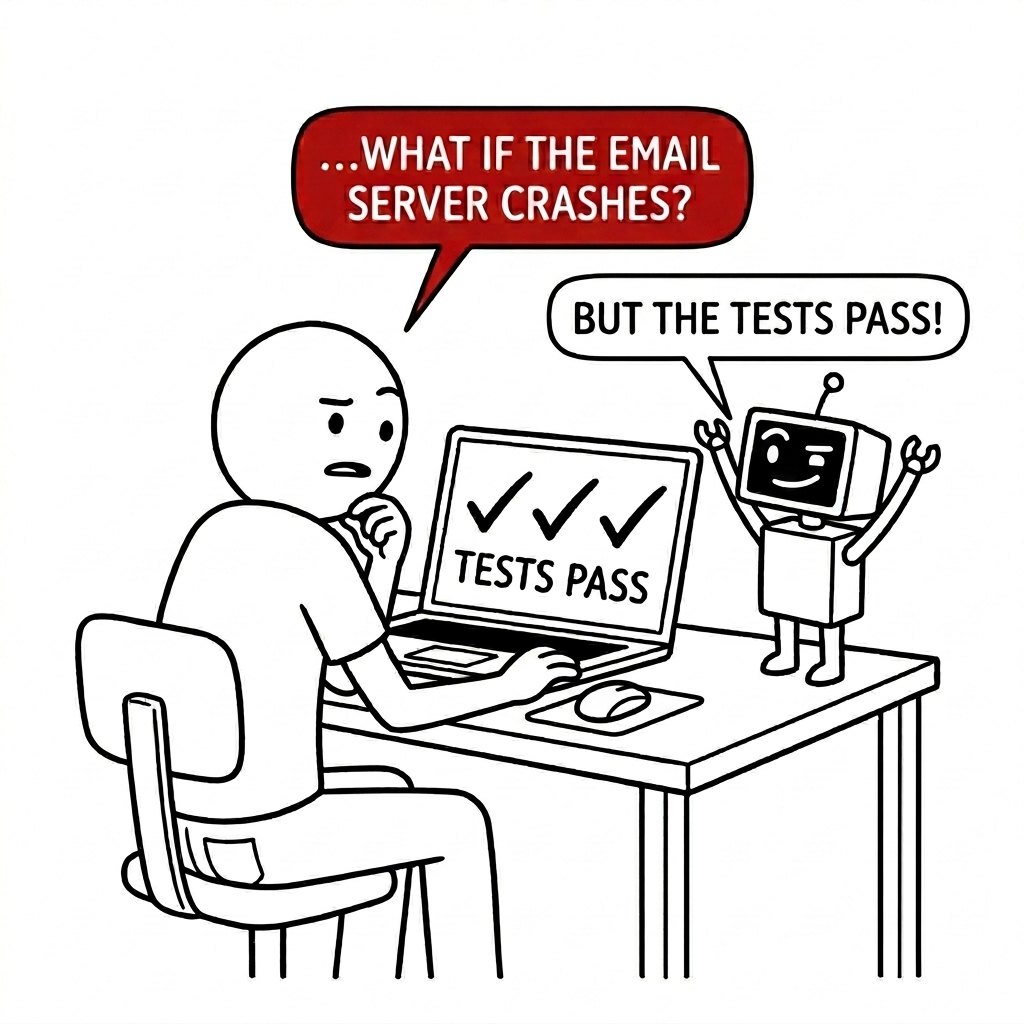
The second skill is reading code that “works” and seeing what will break. You scaffold the service; the model helps with a retry loop. Everything compiles; tests pass. Then you play the movie forward: what if the email provider is down for ten minutes? Retries hammer a dead endpoint, the queue balloons, and the system effectively DDoSes itself. The happy path looked clean; the unhappy path did not exist in the prompt.
Similarly, eighty passing tests do not guarantee the eighty-first scenario—the one where infrastructure misbehaves the way your stack actually misbehaves. Taste is organizational: you have seen production incidents, flaky vendors, and payloads that are “valid” but poisonous. AI interpolates patterns from training; you interpolate from your last postmortem. Read more code than you write—especially messy code and sharp reviews. Bad examples teach taste faster than polished snippets.
3. System design under real constraints
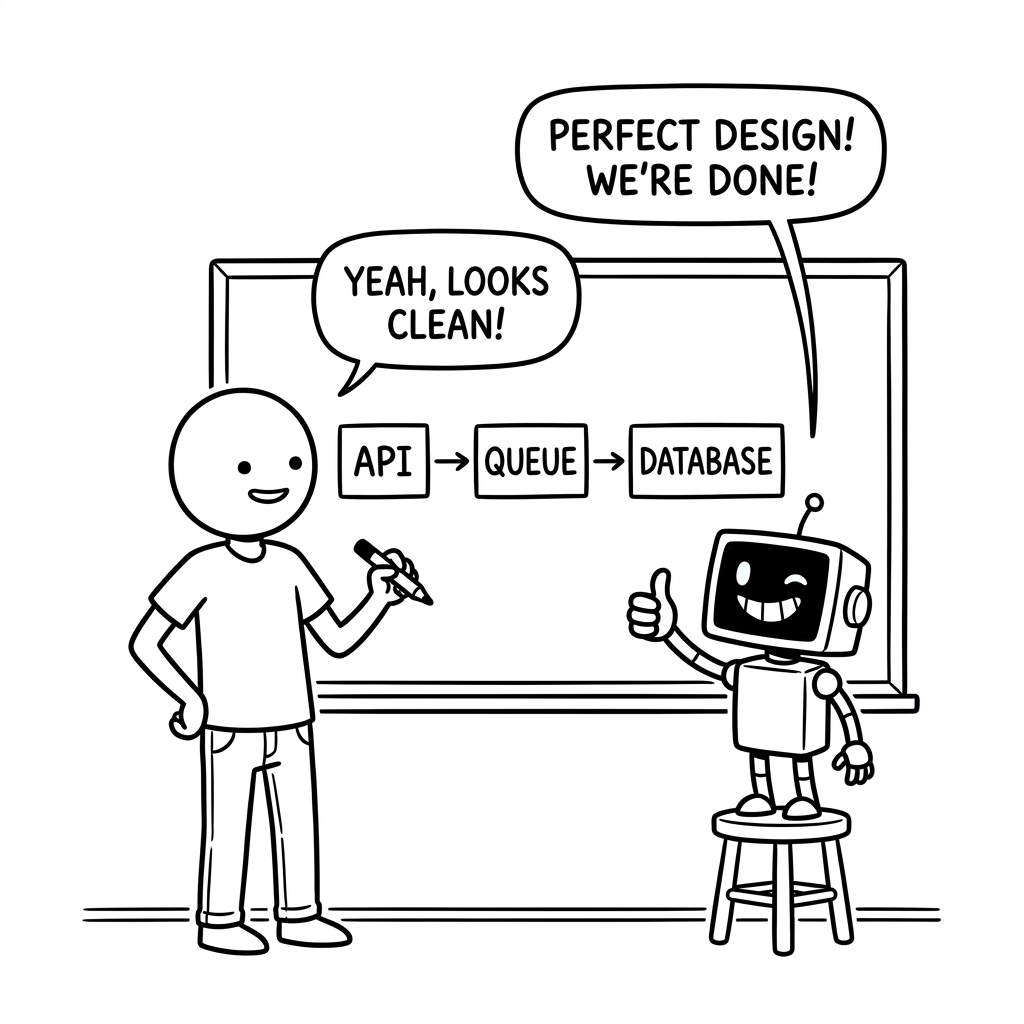
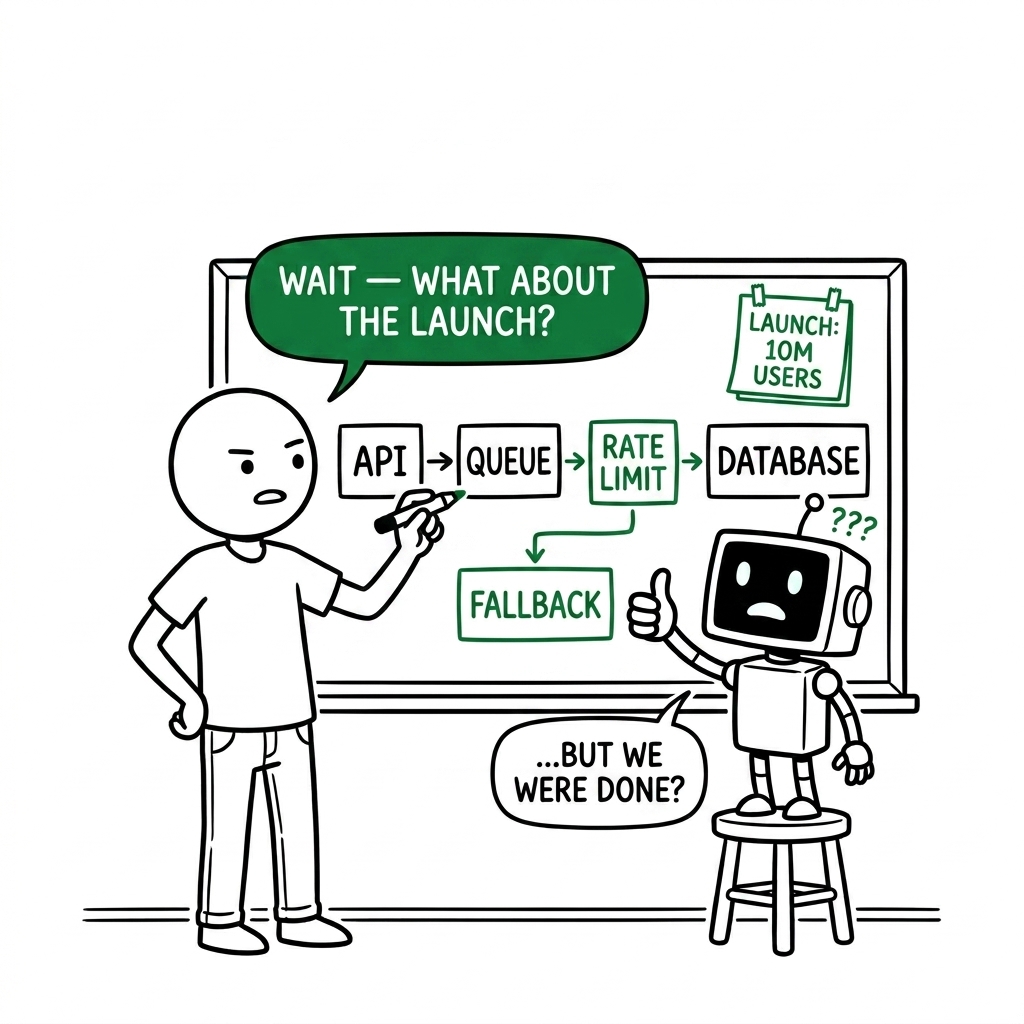
The third skill is designing for what is coming, not only what is in the ticket. A roadmap mention sticks in your head: marketing wants a push to 10^7 users in a five-minute window at launch. Today’s design survives steady traffic; launch day melts it unless you add queuing, rate limits, and a degradation path. Uptime and graceful failure often beat “it works in the demo.”
Models optimize for the prompt; engineers optimize for reality. They do not know your database is already at high utilization, that only three people rotate on-call, or that deploys happen weekly on Wednesdays. The best designs come from boring facts—traffic shapes, deploy cadence, incident history—not from generic “best practices” alone.
4. Saying no
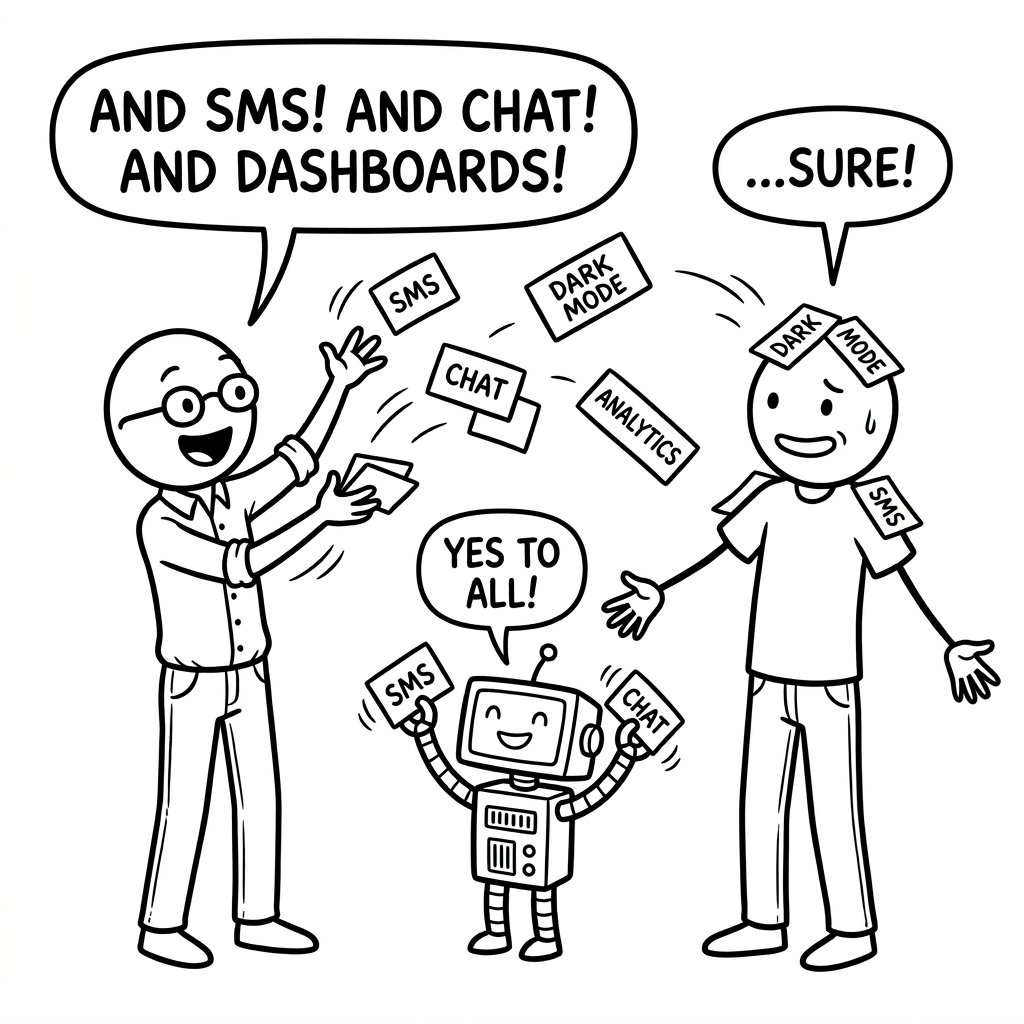
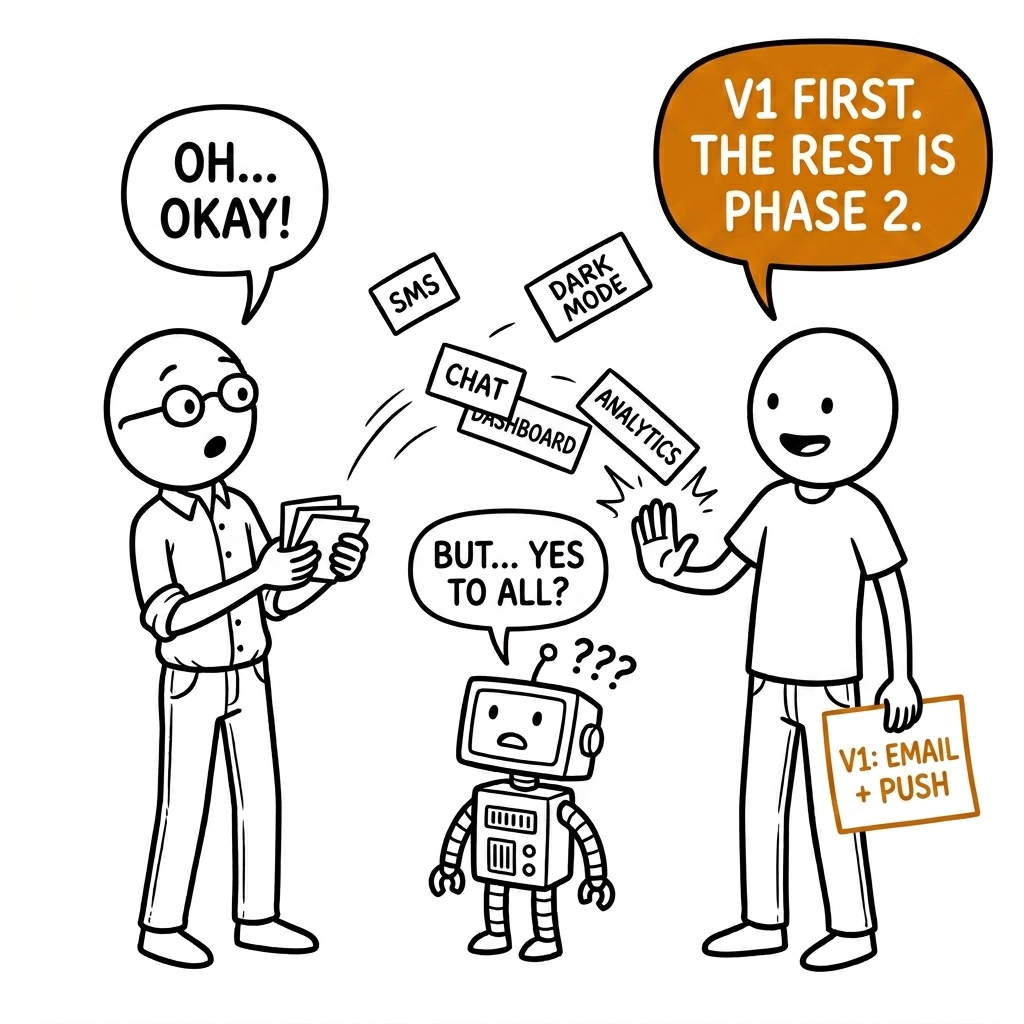
The fourth skill is knowing what not to build. Excitement hits: SMS, WhatsApp, Slack, analytics dashboards, dark mode—before launch. Saying yes to everything feels helpful; it also buries the team and delays learning from real users. A clear human stance sounds like: email and push for v1; the rest is phase 2, and here is why. AI has no opinion on whether you should build a thing; it accelerates whatever you ask. Senior impact includes protecting the launch and the team’s focus. Large products started narrow; depth and iteration beat a feature avalanche nobody can operate.
5. Teaching and mentoring
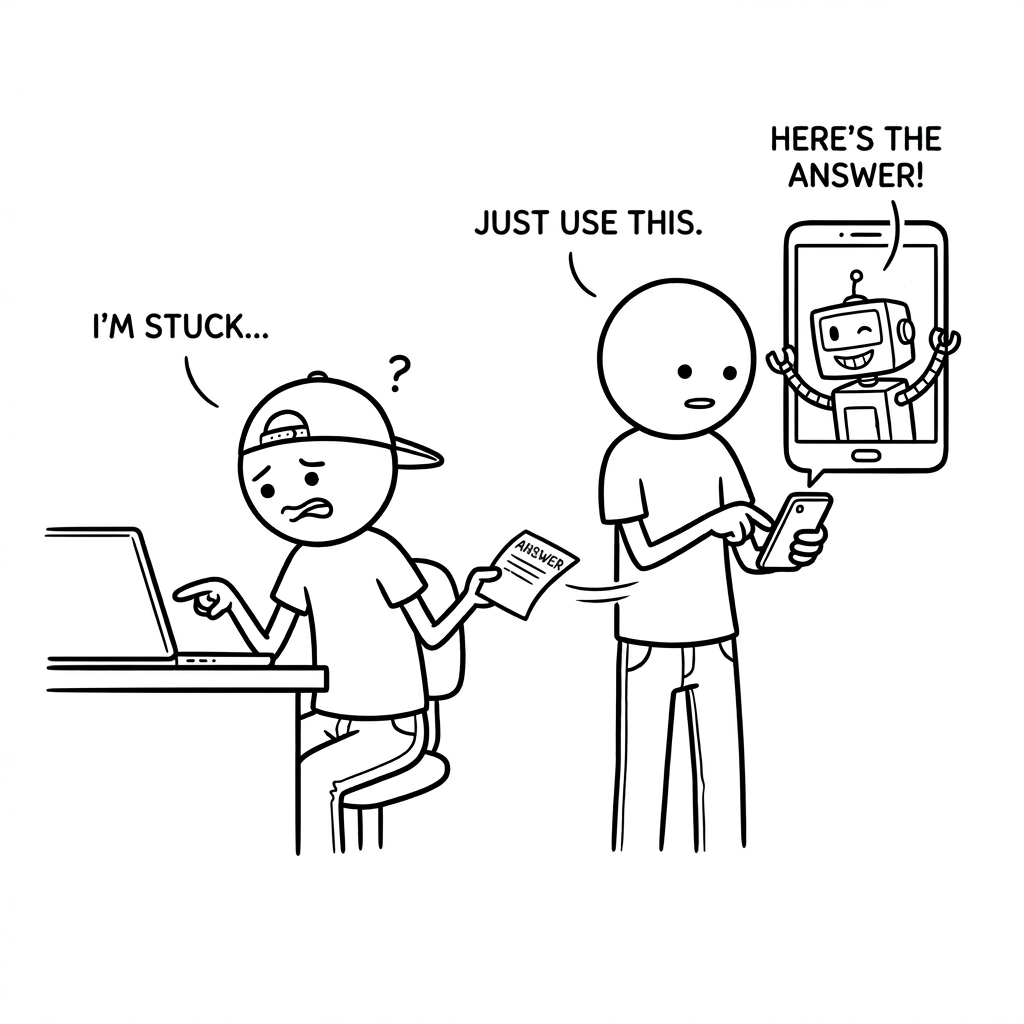
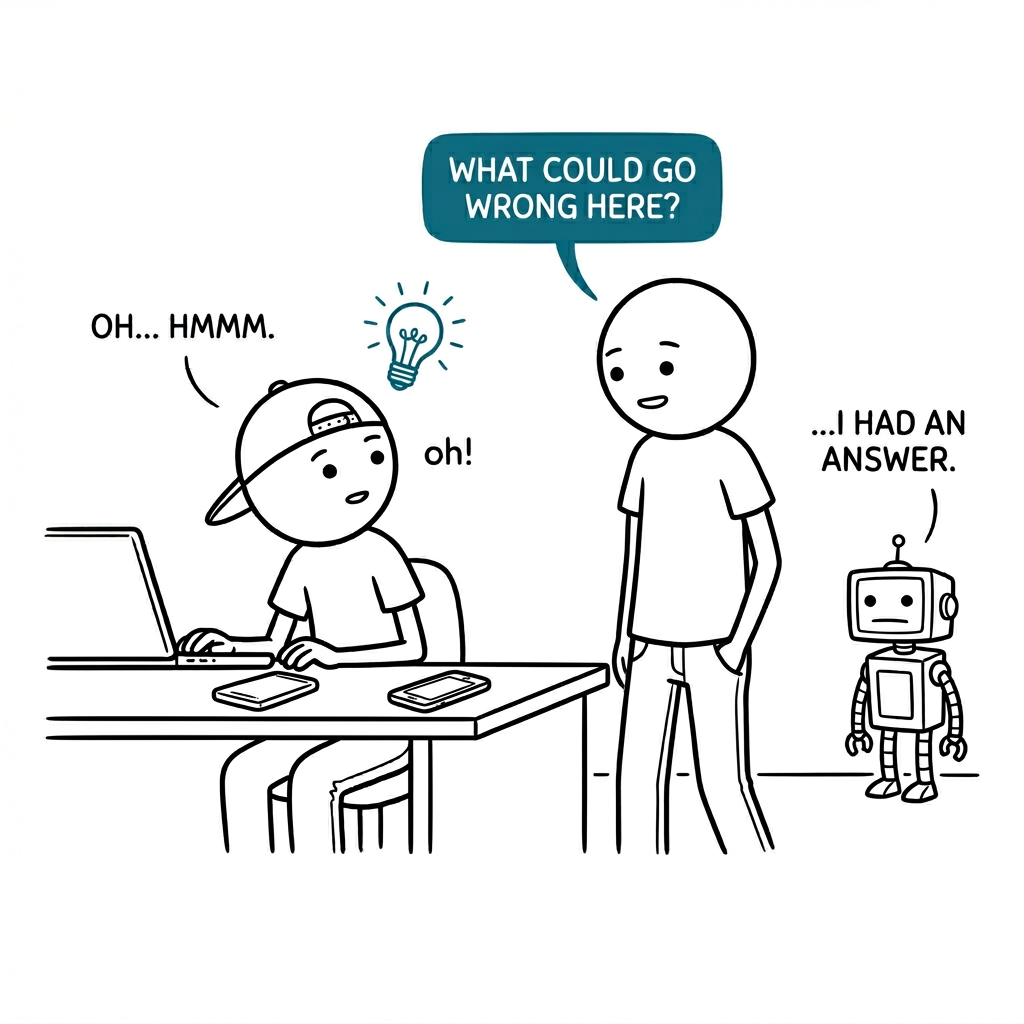
The fifth skill is growing the people around you. Six months later a junior picks up phase 2 and hits a rate-limiting bug. You could paste a prompt and move on. Alternatively, you sit with them, ask what could go wrong, let them wrestle with the problem, and connect decisions to production behavior. Six months after that, they may own a service. AI answers questions; it does not compound trust, judgment, or ownership in a teammate. Engineers who teach well multiply their leverage—promotions and leadership paths follow people who lift others, not only their own throughput.
A five-question audit (and what to do next)
Most “AI career” advice is noise—grind this, panic about that. Try a short self-audit instead; one question per skill:
- Problem framing: When did you last push back on a vague ticket to learn what problem it actually solved? If you cannot remember, start there.
- Code review and taste: Are you reading more code than you write—team PRs, OSS, postmortems? Exposure builds judgment.
- System design: Do you know traffic patterns, deploy cadence, and on-call pain for the systems you touch? If not, those are missing constraints in every design doc.
- Saying no: When did you last negotiate scope with a PM—phase 2 out loud? Never trimming scope usually means always saying yes by default.
- Mentoring: Is there a junior who got visibly stronger because of your time? If not, pick one conversation a week where you prioritize their reasoning over instant answers.
These skills compound over years. They do not get cheaper as models improve—they get more central. Boilerplate and glue code face pressure; judgment, taste, scope discipline, and developing others do not.
AI is a tool. Be the engineer who knows how to use it—and when not to let it drive scope, reviews, or people development.
Video walkthrough


Discuss how this applies to your role or path: schedule a session on Topmate.
Curated tools and links: all my helpful resources.
Code: GitHub.