

Why writing a resume for the recruiter alone is no longer enough — and what to do about it.
When you hit submit in 2026, your resume does not go straight to a person. It takes a trip: first an automated filter, then an AI-assisted scoring pass, and only then a human hiring manager. Two of those three readers are AI-driven. Most people still optimize only for the third — which is a big reason they never get a call.
In 2022, the resume mainly served a keyword-matching ATS and a recruiter who skimmed for a few seconds. That advice — match keywords, lead with strength, quantify — still matters. It is also incomplete. The hiring stack changed: LinkedIn surveys show a majority of recruiters now use AI tooling in the workflow, and platforms like Greenhouse, Workday, and Ashby (plus newer recruiting products) bake LLM-based evaluation into the process.
The Hiring Funnel in 2026
For a competitive role (backend at a payments company, SDE at a large tech firm, or any high-volume listing), the shape of the funnel is brutal but consistent. Think on the order of 1000 applications submitted, roughly 100 surviving an initial filter, perhaps 20 after scoring, 5 interviewed, one offer. Exact ratios vary; the point does not: most resumes never reach a human, and of those that do, many never reach the hiring manager.
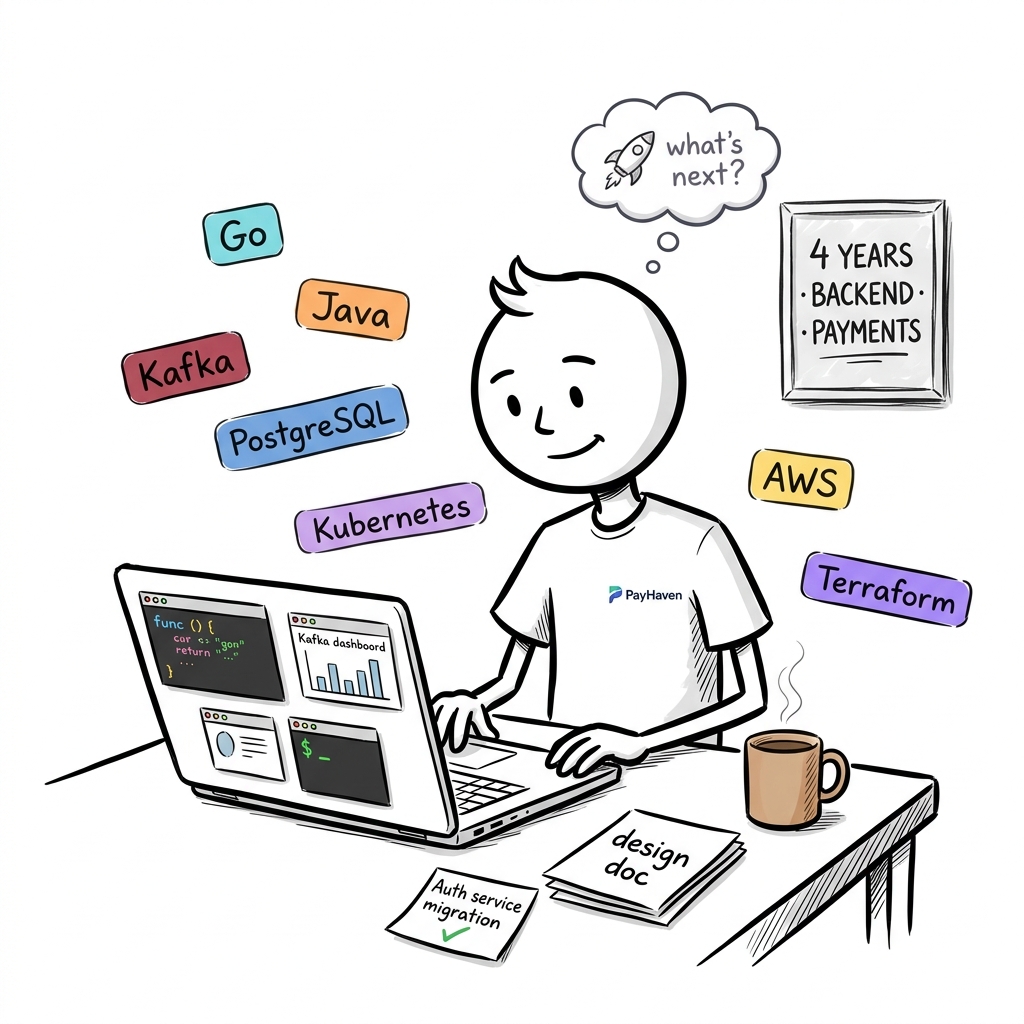
Imagine you have years of Go, Java, and Kafka experience at a payments company. You spot a senior backend role on a payments platform, read the JD, and feel like a strong match. You polish a two-column Canva template with a photo, a QR code, and a generic summary — and apply. That is exactly the profile the first gate is built to stress-test: title alignment, JD language, parseable layout, and obvious tailoring.
Each stage asks a different question:
- Stage 1 — The Filter: Does this resume plausibly belong in this pile?
- Stage 2 — The Score: Among survivors, which candidates look strongest when summarized and scored against the JD?
- Stage 3 — The Read: Among the strong ones, who do I actually want to interview?
Those are three different judgments. Your format and content need to satisfy all three.
Reader One — The Filter (AI Screener)
The first reader is not “evaluating” you deeply. It asks a binary question: Is this candidate relevant for this role? Unclear answers get dropped. Older systems matched keywords; in 2026 many screeners compare your document to the job description in a structured way.
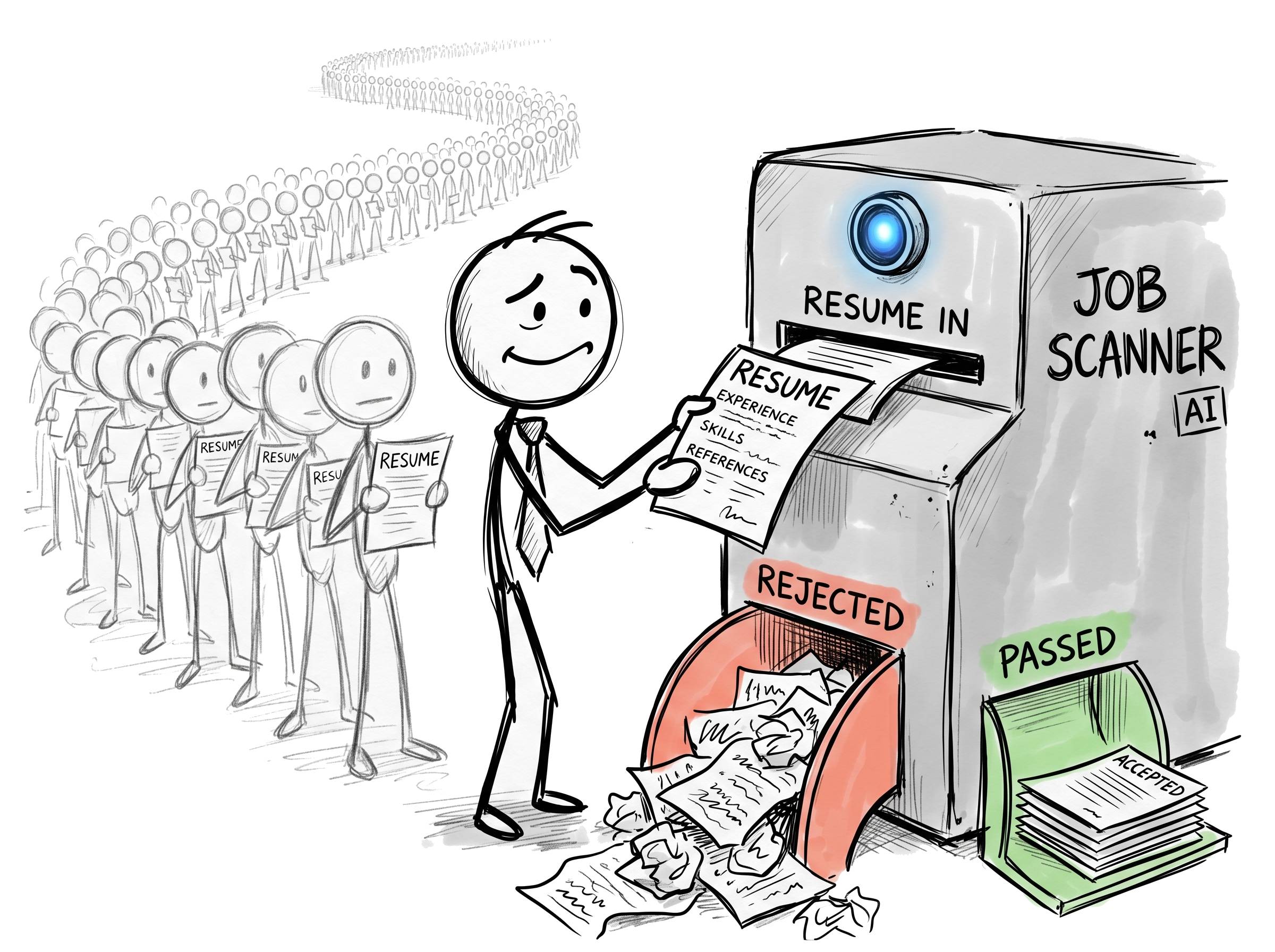
Resumes often fail here for predictable reasons:
- Title mismatch. You apply as “Full-Stack Developer” to “Senior Backend Engineer.” The filter may not bridge that gap even if your work was mostly backend.
- Missing must-have language. The JD says “Kubernetes” repeatedly; you write “container orchestration.” Same skill, different token — the filter may not translate.
- Parser-hostile format. Two-column layouts, photos, decorative QR codes, or image-based text confuse extraction. The model sees noise. Prefer single-column, plain text, no visuals-as-text.
- No tailoring. Spray-and-pray used to be common. Today you can paste the JD into an assistant and align title, summary, and skill order in minutes — so a generic resume reads as low effort.
Additionally, a summary that could apply to any company (nothing about payments, risk, or the domain in the JD) weakens relevance for a payments backend role. The filter is where you avoid losing, not where you win. Fix it quickly per application and move on.
Reader Two — The Score (AI-Assisted Recruiter)
After the filter, a recruiter may have dozens or hundreds of remaining resumes and need a short list for screening calls. Reading every line top to bottom is not scalable — so many teams paste resumes into tools that produce a summary, strengths and gaps, and a fit score (often something like 1–10) against the JD. The recruiter often reads what the AI said about you, not only your PDF.
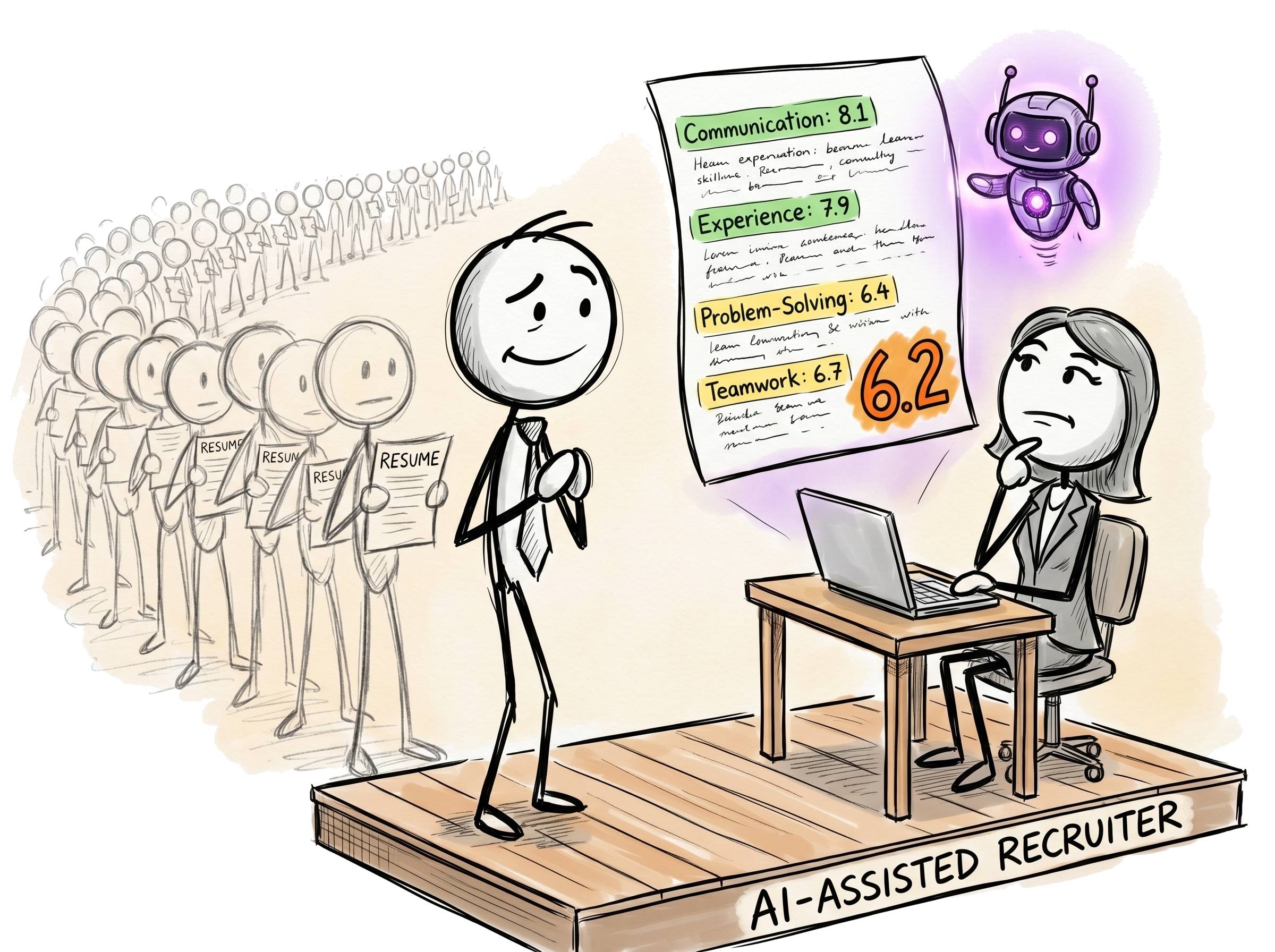
The question shifts: When AI compresses your resume, does the summary still sound impressive? Vague bullets (“architected scalable systems,” “significantly improved performance”) compress to mush. Specifics (“Kafka pipeline at ~3,200 events/sec; zero data-loss incidents in 14 months on-call”) survive compression.
Common failures at this stage:
- Vague superlatives with no numbers — adjectives do all the work.
- Fake-precise metrics you cannot defend in a five-minute conversation.
- Generic AI tone — “leveraging,” “spearheaded,” “passionate about clean code.” Tools and humans increasingly flag resumes that read like untouched model output. Use AI for structure; rewrite in your voice with details only you know.
- Skill soup. Listing Ruby, Scala, Kotlin, and ten more tools when your experience bullets only support a subset makes models discount decorative keywords. Skills should appear in context in real bullets, not only in a comma-separated wall.
Why would a recruiter forward a candidate scored 6.2 when the same tool shows 8–10 for others? You are not only convincing a human anymore — you need the intermediate summary to make you look like a clear yes.
Reader Three — The Read (Hiring Manager)
If you reach this stage, upstream questions are largely settled. The hiring manager asks: Do I want to spend 45 minutes with this person? They read more slowly — but they still see many resumes in a day and remember only a few.
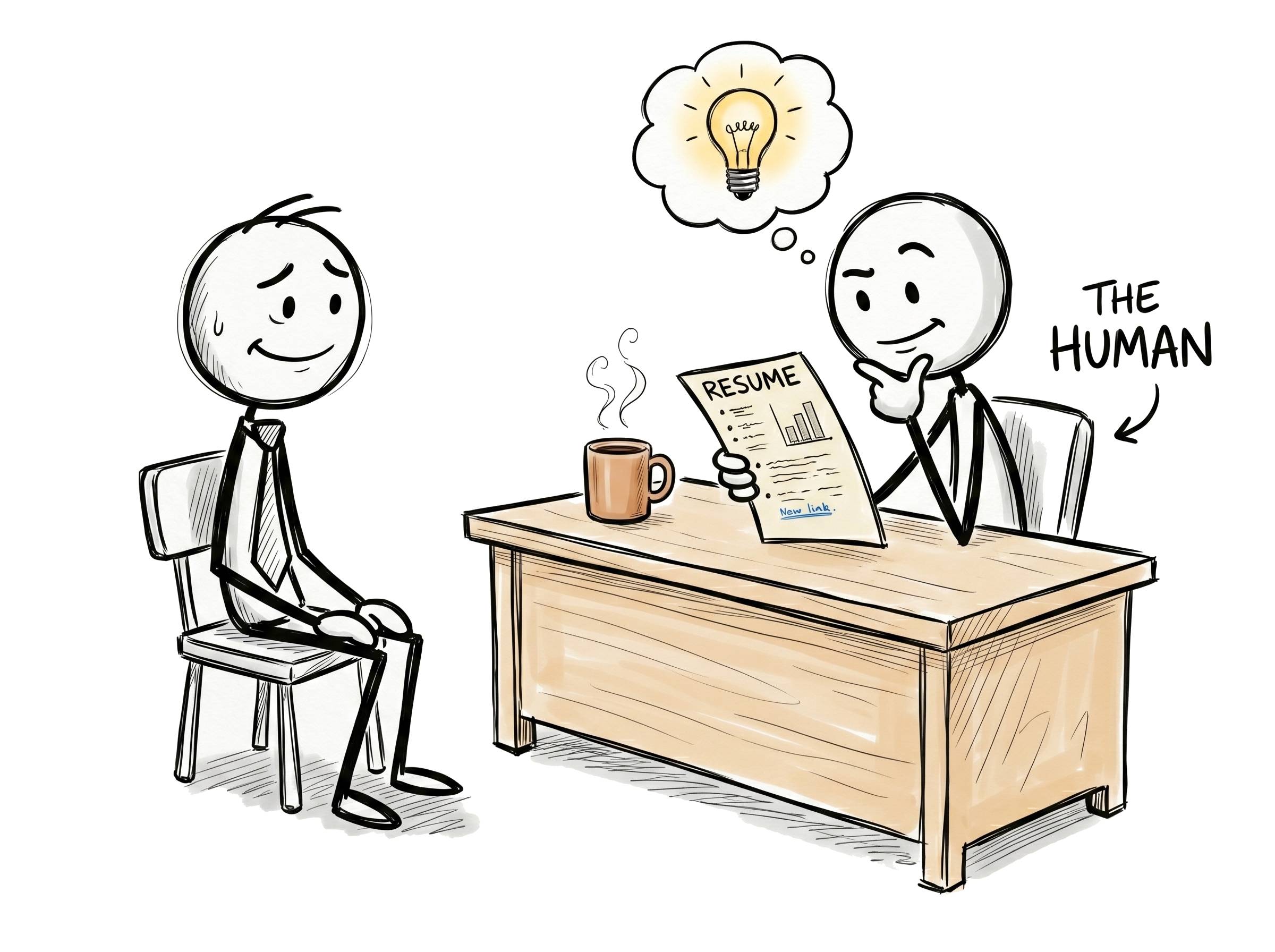
Failures here are about narrative and proof:
- No story. A flat list of jobs with no visible arc — what kind of engineer you are becoming — is easy to forget.
- Claims without evidence. In an era where claims are cheap to fabricate, links matter: GitHub with real activity, demos, posts, talks. One strong artifact beats ten weak links; if the first click is a trivial stub, the rest lose credibility.
- Nothing memorable. One concrete detail (e.g., the runbook the team uses after you debugged a production incident) beats ten polished generalities.
- Bullets you cannot own. If you would not confidently talk about a bullet for five minutes in an interview, cut it — including short roles or thin contributions that waste airtime.
A practical self-test: print your resume and read it as the hiring manager. Would you hire yourself? Your summary should quickly answer three things: what you have been doing, why you are valuable to this team, and what impact you can create — not your entire life story.
Checklist, Video, and Next Steps
Before each application, run a short audit — roughly four checks per reader:
For the Filter: (1) Title matches the role. (2) Must-have JD keywords appear in their wording. (3) Single-column, parse-friendly format — no two-column traps or text-as-image. (4) Summary and skill order tailored to this posting.
For the Score: (5) Bullets include real numbers (latency, scale, money, time). (6) Claimed skills show up in bullet context, not only in a list. (7) Voice sounds human — rewrite anything that reads like generic AI. (8) Every number survives “tell me more” — if not, remove it.
For the Read: (9) A coherent arc top to bottom. (10) Claims backed by links where possible. (11) At least one memorable, specific detail. (12) Every remaining bullet survives a five-minute interview question.
One rule ties it together: most people write only for the human. That is why they never reach one. Ask each edit: does this help the Filter, the Score, the Read — or ideally all three? Strong bullets do all three at once (keywords + verifiable metrics + interview-ready detail).
For a structured template with inline coaching and this checklist on the last page: download the free 2026 resume template (Topmate). For a personal pass on your filled-in version: 1:1 resume review. Broader career conversations: schedule a session.
Video walkthrough


Curated tools and links: all my helpful resources. Code: GitHub.