

Last month I interviewed someone for a senior data-engineer role: a standard sliding-window style problem, nothing exotic. They echoed the prompt, then started typing in a handful of seconds. Under three minutes later they had an optimal, polished solution—honestly better than I would have typed cold.
So I asked one follow-up: Why a hash map here instead of a set? About ten seconds of silence. That is when I knew.
After hundreds of interviews, on both sides of the table—the shift underway in hiring is the largest I have seen. This article is not a generic “AI bad” rant. It is about one specific failure mode: using AI to fake and cheat competence in real time during an evaluation—and why that choice hurts the person making it most.
The cheating industry nobody talks about
This is not a few clever candidates. There is a funded product category built around invisible help during live interviews.
In March 2025, Columbia student Roy Lee shipped Interview Coder: a layer on top of your desktop that listens and feeds answers while screen share shows a “clean” editor underneath the overlay. He used it in an Amazon interview, posted footage, and faced a rescinded offer and a year’s suspension—then rebranded and raised millions for Cluely (“cheat on everything”), including a reported follow-on from Andreessen Horowitz. Cluely is not the only name: Leetcode Wizard markets openly as an AI-powered interview-cheating app; Final Round AI and similar “copilots” follow the same pattern—mic plus hidden overlay, two realities on one call.
Employers have responded. Amazon has explicitly banned AI tools in interviews. Google’s leadership has fielded internal pressure to bring on-sites back (reported by CNBC). Founder Henry Kirk once recorded a virtual coding round with 700 applicants and estimated over half were cheating. That is the 2026 backdrop: tools are easy, detection is tightening, and the middle ground—“nobody will notice”—is shrinking.
Why people cheat: you are not lazy, you are scared
Most people reaching for overlays are not looking for an easy life. They are frightened—and that fear has structure.
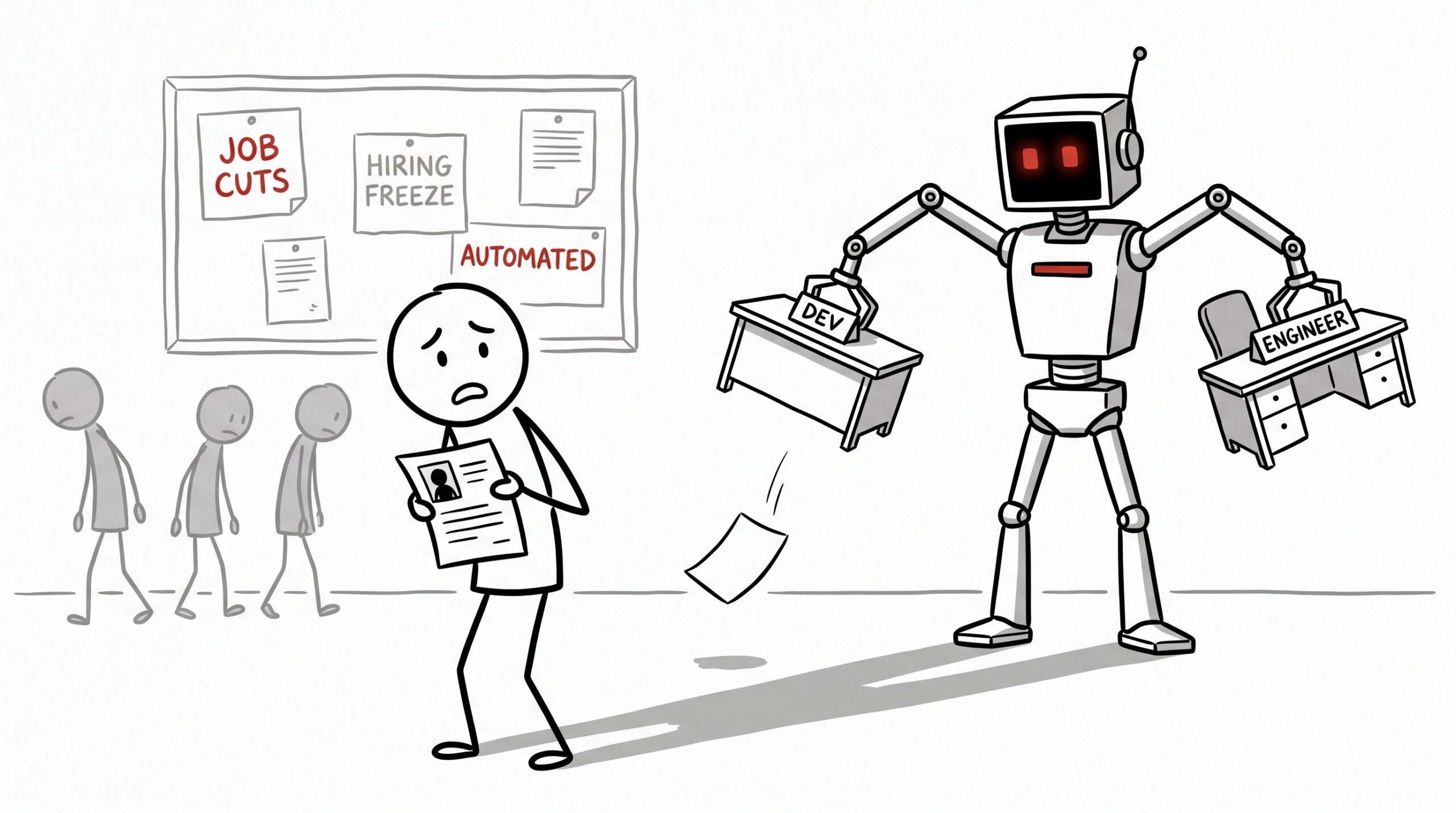
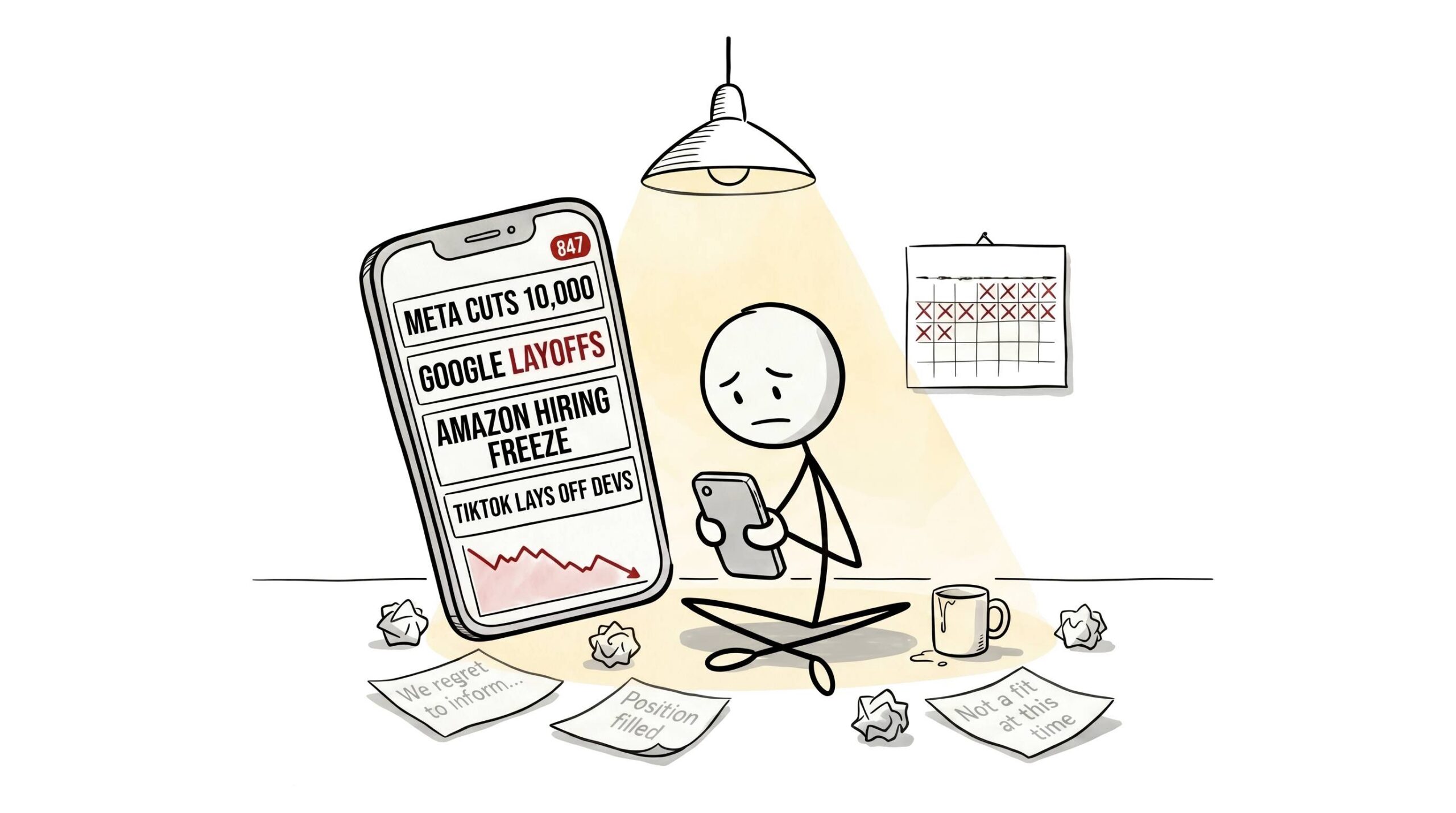
Headlines about cuts, AI replacing tasks, and shrinking hiring pools land differently when you are inside a company—and brutally when you are outside it. A fourteen-month search, a visa clock, savings draining, or family asking when the offer lands changes how “just this once” sounds.
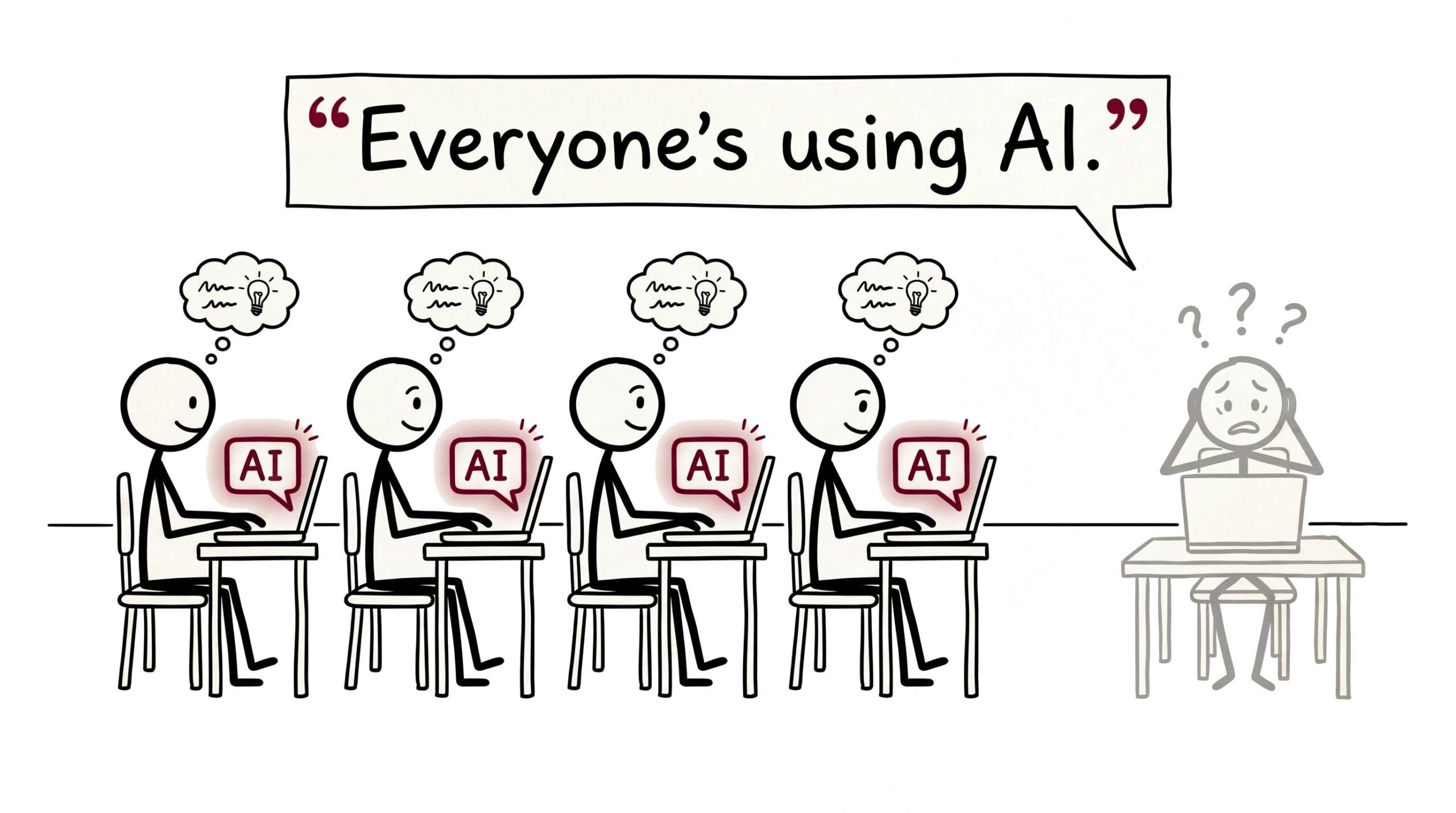
Candidates tell me plainly: Everyone uses AI; if I do not cheat, I am at a disadvantage. The first half can feel true in a noisy market. The second half—therefore I should hide an overlay in an interview—does not follow, but FOMO is not rational; it is social.
Furthermore, the same news cycle that makes employed engineers anxious makes job seekers desperate: hundreds of applications, few replies, and the sense that any single interview might be the only shot for months.
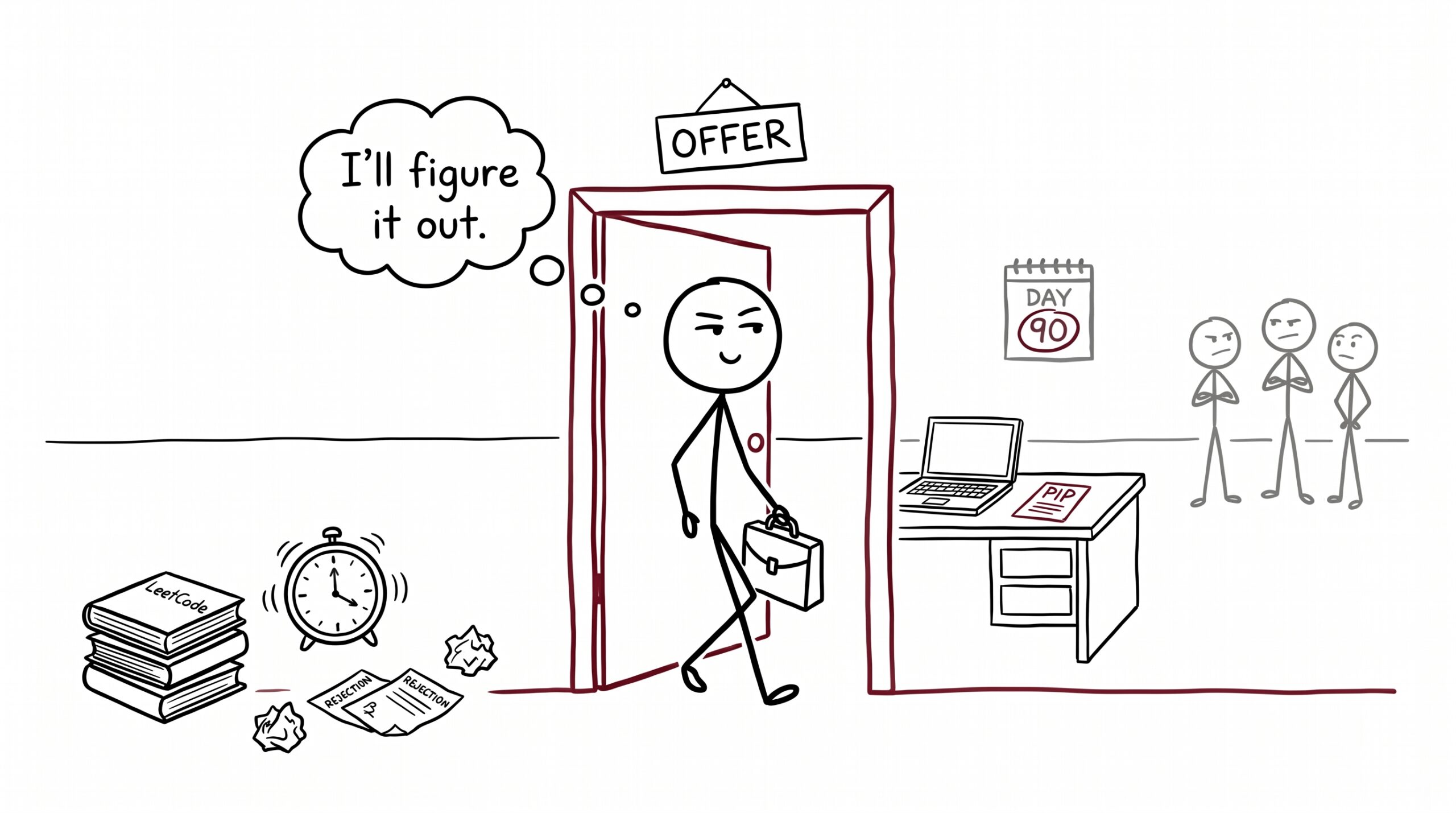
The seductive line is always: I only need to get in—then I will catch up. That sentence is the trap. We unpack why in the next section.
The five tells interviewers already use
Mock interviews train pattern recognition in process, not only answers. After hundreds of sessions, the same signals recur:
- The pause fingerprint. Real candidates read, clarify, sketch. Overlay users sometimes blast code instantly—or wait an oddly steady four–six seconds every time, consistent with round-trip latency.
- The eye flicker. A quick glance up or sideways, then back to camera: reading, not thinking. Interviewers notice more than candidates assume.
- Optimal first draft, no journey. Strong engineers still iterate—brute force, then refine. A perfect hard solution on attempt one, with no scratch work, is a flag.
- Names without intent. Ask why a variable or helper is named what it is. If the author cannot explain code from thirty seconds ago, they often did not author the reasoning.
- The “why” question. Why hash map vs set? Why two pointers vs binary search? Humans defend choices imperfectly but concretely; generated code does not come with lived trade-off stories.
Similarly, interviewers share notes and company playbooks; “secret” tells are not secret anymore. The arms race is real—and today, interview hygiene favors the side that asks why early and often.
The trap: the cost of getting caught (or not)
Assume you slip through. The worst damage is not “no offer.”
- Blacklists and long memory. Many companies keep internal flags; recruiter networks overlap. One burned bridge can echo longer than one bad quarter.
- A small industry at the worst moment. The engineer who interviewed you may reappear at your next target company in eighteen months—with a story attached to your name.
- If you get hired anyway. Ninety days form first impressions. If you cannot ship, debug, explain design choices, or stand behind code in review, performance management arrives fast. A six-month stint that ends in termination is harder to explain than a failed honest interview.
Here is the asymmetry worth writing down:
- Honest attempt, no offer → you are exactly where you started.
- Cheat, no offer → you are also back to baseline on that outcome (the trap is not the rejection—it is what you skipped learning).
- Cheat, offer in hand → you signed up for the most stressful, exposed months of your career if the job and your real skills diverge.
I use AI every day—here is the line, and what works instead
This is not anti-AI. Claude, ChatGPT, Cursor, Copilot—pick your stack; they are part of modern work. The line is simple: use AI to build skill, not to perform skill you do not have in a closed evaluation.
What actually helps:
- Learn, do not outsource the solve. Ask why two pointers fits this invariant—not “paste the solution.”
- Think out loud. Narrate trade-offs while you practice so “defend this choice” feels normal, not theatrical.
- Debug without AI sometimes. Weekly, sit with one bug end-to-end; reasoning through broken state is what interviews still probe.
- Principles over pattern labels. “Two pointers” as a chant fails on the first variant question; understanding the invariant survives.
- Practice with humans who push back. The gap between candidates who pass and candidates who get caught often comes down to reps against someone who rejects vague answers—not an assistant that agrees with every step.


Book mock interviews: Topmate profile · schedule a 1:1 session.
Curated resources: all my helpful links.
Code: GitHub.
FAQ (short)
Is using AI in a coding interview cheating? Follow each employer’s rules. Major tech companies generally prohibit undisclosed AI assistance in evaluated interviews—treat undisclosed help as cheating unless they explicitly allow it.
Is using AI to prepare OK? Yes—explanations, drills, and pattern intuition are among the best uses of models. The boundary is preparation vs hidden performance.
Are on-sites coming back? Partially—larger employers have discussed more in-person or live-debug steps specifically to reduce overlay cheating; remote formats are also evolving.